
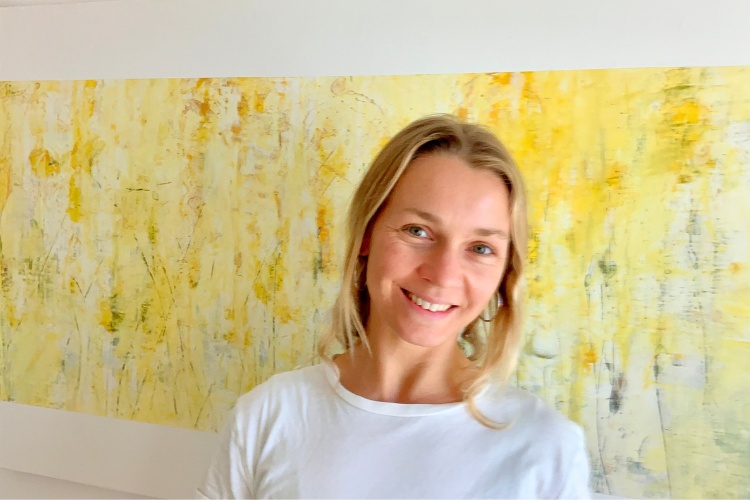
Inspired by the sea, nature and the Algarve’s slower rhythm, the artist transforms shifting light and natural movement into layered, contemplative abstractions
Dividing her time between Lagos and Germany, Lea “Silversides” has developed her work as an artist through exploration. She grew up in Worpswede, near Bremen – a village historically known as a refuge for painters who, in the 19th century, found inspiration in the surrounding landscapes.
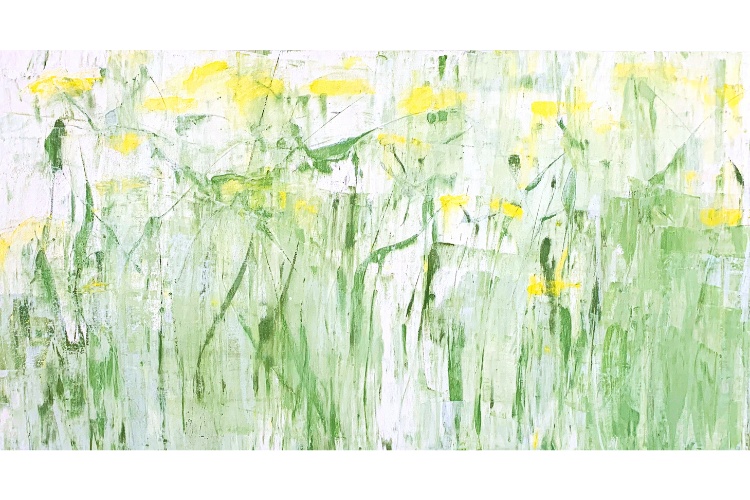
Today, the south of Portugal has taken on an increasingly central role in both her life and her art, which is deeply influenced by nature, light and a demanding creative process.

Her path into art, however, was not straightforward. For many years, painting remained an intermittent presence in her life and she did not see herself as an artist. “The art world felt intimidating and somewhat closed, and I wasn’t sure where I belonged within it,” Lea admits.
Whilst studying Cultural Anthropology and European Ethnology at the Georg-August-Universität Göttingen, followed by a specialisation in the conservation and restoration of wooden pieces, her artistic practice began to take on new meaning.
Alongside training in art history, material analysis and traditional techniques, Lea attended additional art courses and encountered a teacher who encouraged her to further develop her creative instincts. Access to a studio at the university proved decisive.
“It was a turning point that allowed me to experiment freely and develop my visual language more independently,” she explains.
At the same time, Lea worked in an art gallery, where daily contact with contemporary works and artists helped her realise that creativity “was not something external” but something she needed in her life. It was during this period that she created the first piece she considers truly meaningful.
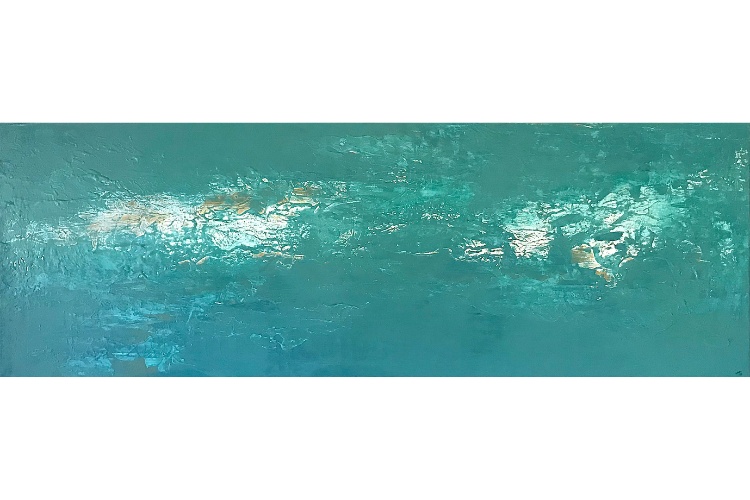
“It was the first time I felt that I had managed to truly transport something, not just an image, but a moment,” she recalls. Looking at the finished piece, she sensed she had captured something genuine: “I remember standing in front of the finished work and realising that it held something. It wasn’t perfect, but it felt honest.”
After completing her studies, Lea decided to take a break before beginning her professional life.
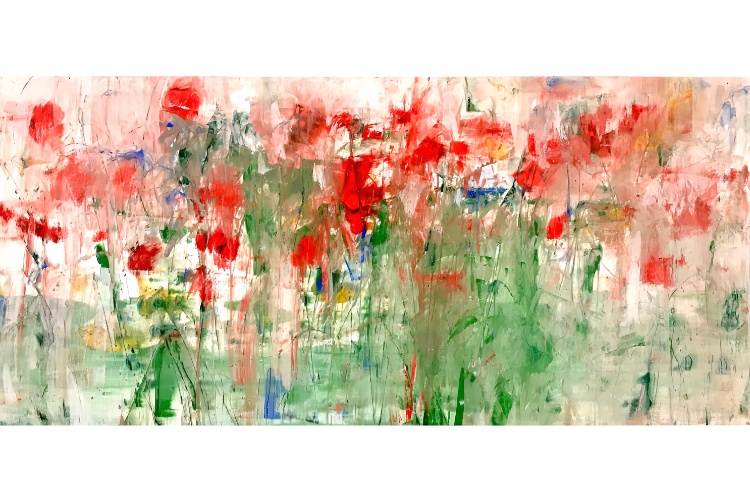
Her initial plan was to stay in the Algarve for just a month, work in tourist accommodation and devote her time to water sports, particularly kitesurfing. What was meant to be a brief stay in Portugal, however, gradually extended into several years.
The ocean, the region’s slower pace and the creative freedom she found here had a profound influence on her path. The Algarve soon became an important part of both her personal and artistic development.
Working under the name “Art Silversides”, the painter maintains a strong connection to the sea.
Whilst travelling around the world, Lea worked as a diving instructor in Hawaii – an experience that reshaped the way she perceives light, movement and space. It also brought her face to face with a scene she has never forgotten: “One of the most powerful images I carry with me is watching vast schools of silversides spiralling through the water, their bodies catching and reflecting the light in constantly shifting patterns,” she says.
The memory became a symbol of fluidity, reflection and transformation – elements that are very present throughout her work.
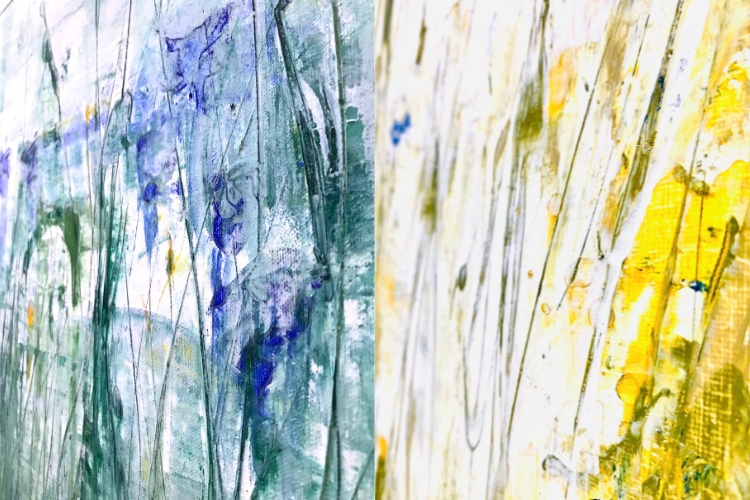
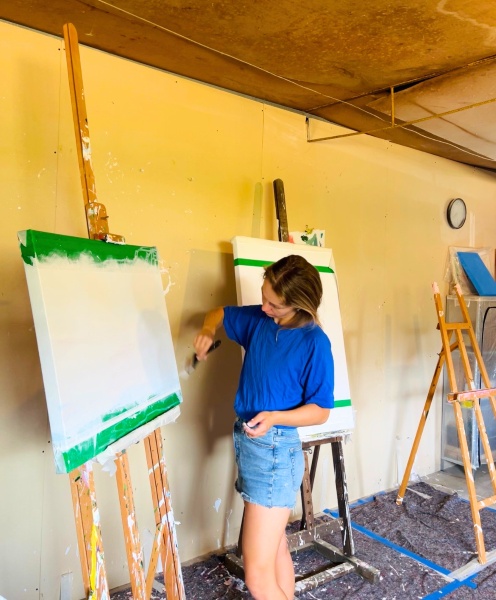
Today, Lea works primarily with acrylic paint, a choice influenced both by her technical background and by the way she constructs her paintings. “My technique relies heavily on layering, timing and controlled drying phases. Acrylic allows me to build surfaces step by step,” she explains. Her paintings are developed through successive layers that allow her to explore the relationship between light, depth and atmosphere.
Whilst the sea remains a recurring influence, nature as a whole is her main source of inspiration.
“It just offers this infinite variety of forms, colours and atmospheres that are constantly shifting but deeply grounded at the same time,” she says.
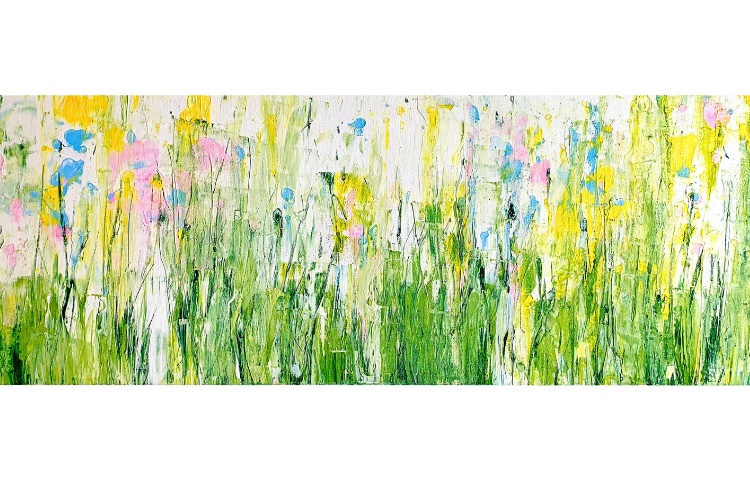
Rather than depicting landscapes literally, the artist aims to translate subtle visual impressions, such as reflections on water, seasonal changes, movement within the landscape or variations in light.
Over the years, she has developed several series, including Water, Flower and Light, which she sees as different stages in her development, reflecting both emotional and environmental influences.
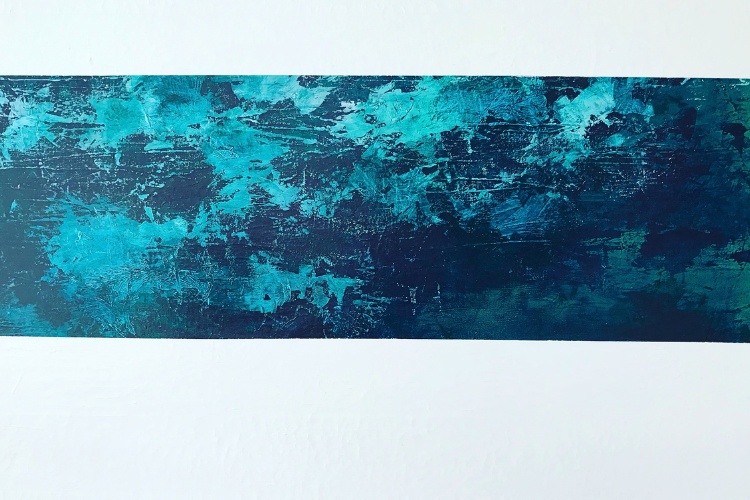
“The Water series grew out of my deep connection to the ocean and my experience as a diving instructor. The Flower series evolved later, exploring colours and movement, often influenced by seasonal shifts, and Light has become the underlying element that connects all of my work,” Lea notes.
Her creative process is exacting. If a painting fails to match the vision she has in mind, she does not hesitate to discard it. “If the painting does not come close to that image, I start over. Many canvases get ripped apart or fly as whole into the trash,” she admits.
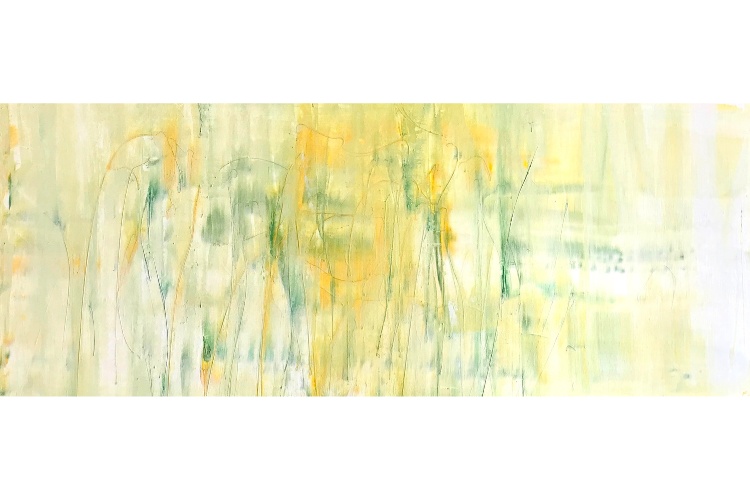
Yet there are also moments when everything aligns. “Those wonderful and rare moments when everything falls into place… That alignment is what keeps me coming back to the studio.”
But despite the intensity of the process, what she hopes to convey is precisely the opposite: calm and contemplation. “I would like viewers to slow down for a moment and feel at rest in front of the painting,” she states.
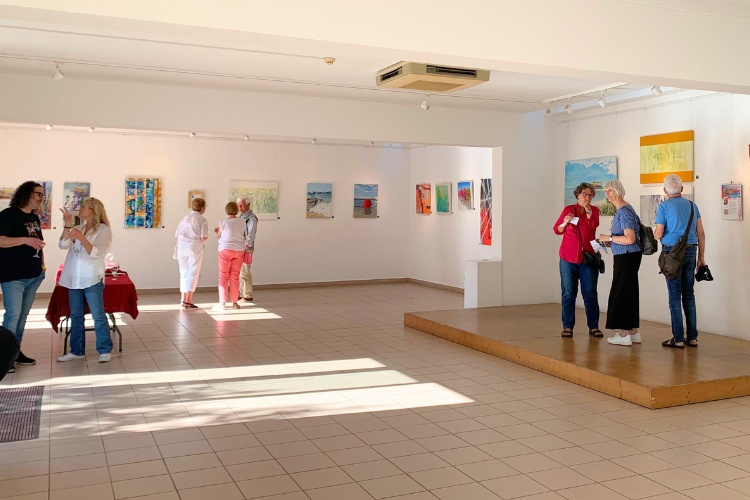
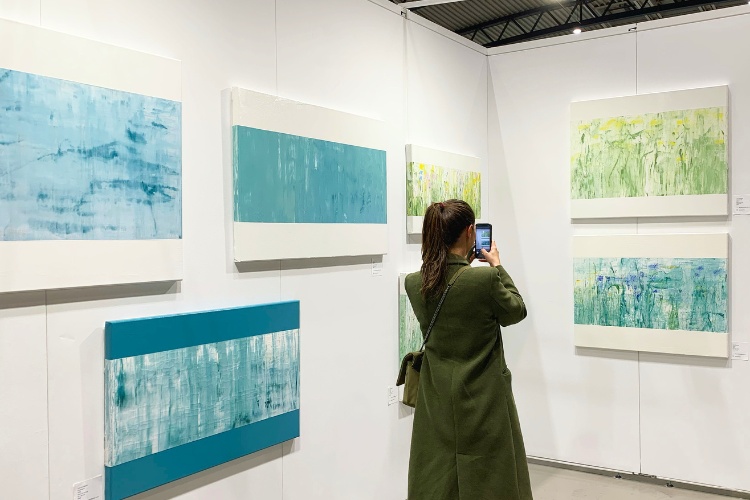
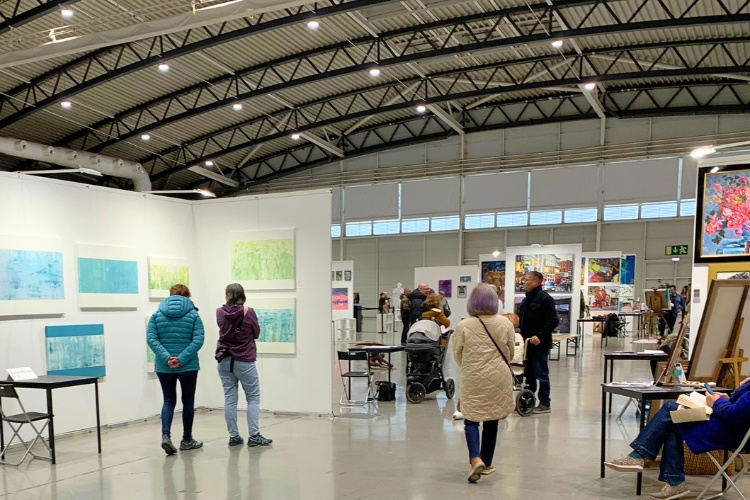
Lea works exclusively with unique pieces, built through layers and movements that give each canvas its singular character. Some of her works are currently on display at Cult n’ Art Café, in Alvor, whilst the rest is available online through her website and social media.
Looking ahead, the artist hopes to deepen her practice and dedicate more uninterrupted time to painting. Rather than focusing on quantity, Lea’s ambition is to develop a consistent visual language “that resonates beyond a specific place or moment”.
Follow Inside Algarve Magazine on Instagram and Facebook for more news!
Read also:
Fortaleza da Luz, where history meets contemporary Portuguese cuisine