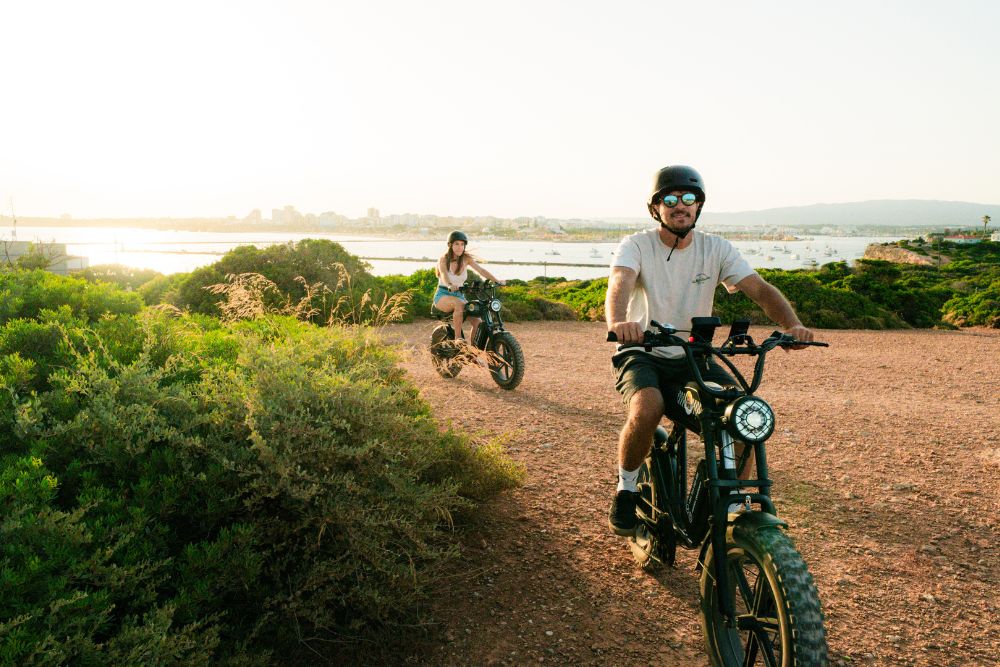
Algarvian Mário Afonso brings together travel, cycling and local knowledge with small-group tours across the region
Some places are discovered through their landmarks, others through their landscapes or cuisine. But to truly understand a destination, it helps to experience it through the people who call it home.
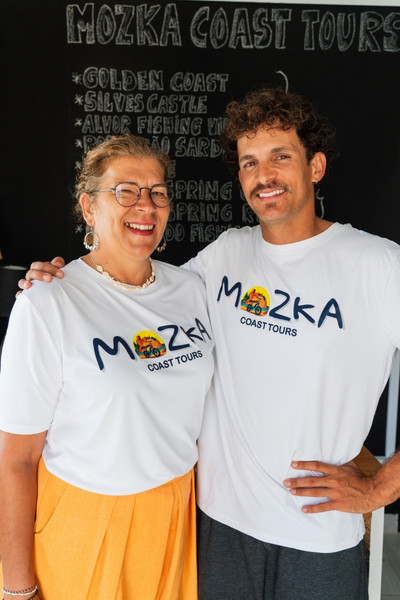
That belief lies at the heart of Mozka Coast Tours, a project created by Algarvian Mário Afonso to reveal a more authentic side of the region, beyond the usual tourist trails and closer to its communities, traditions and cultural heritage.
Departing from the Mozka shop in Ferragudo, the guided tours explore some of the Algarve’s best-known locations under Mário’s guidance. Rather than focusing solely on postcard-perfect scenery, each route highlights local history, customs, gastronomy, heritage and the small details that often go unnoticed.
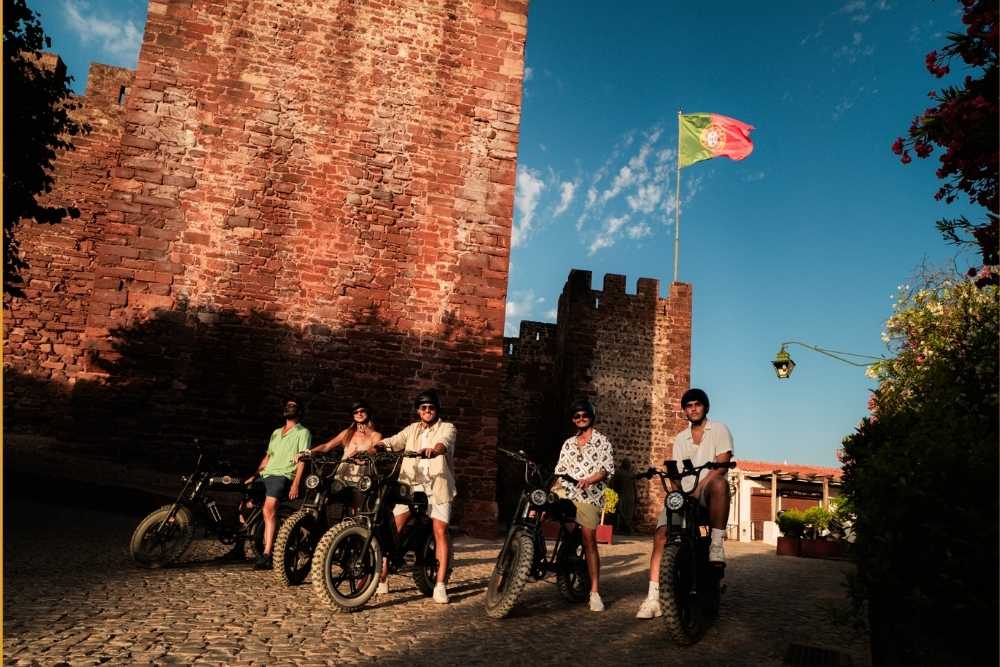
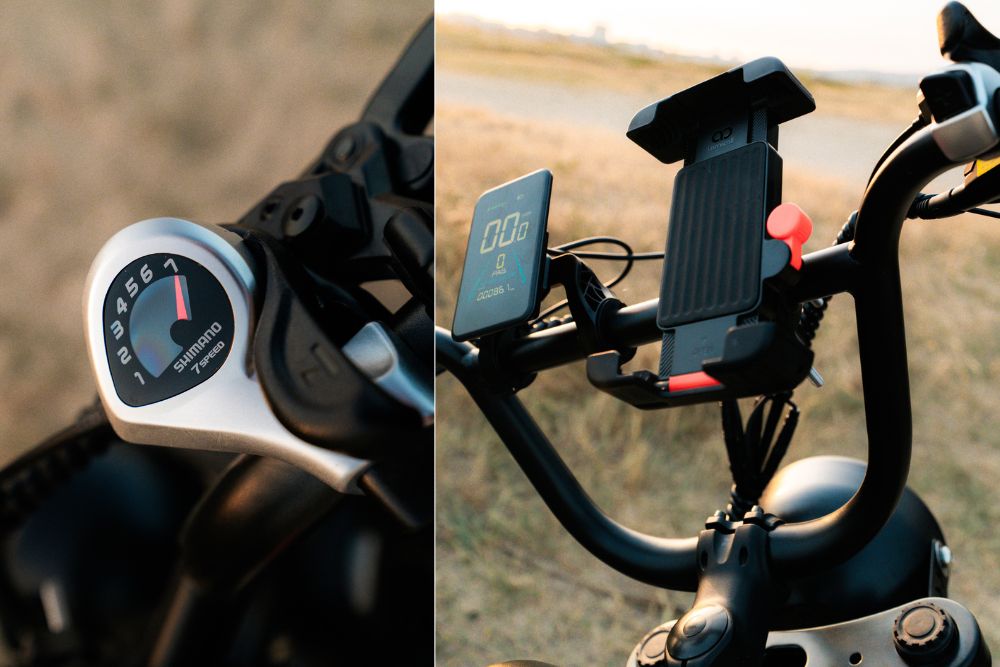
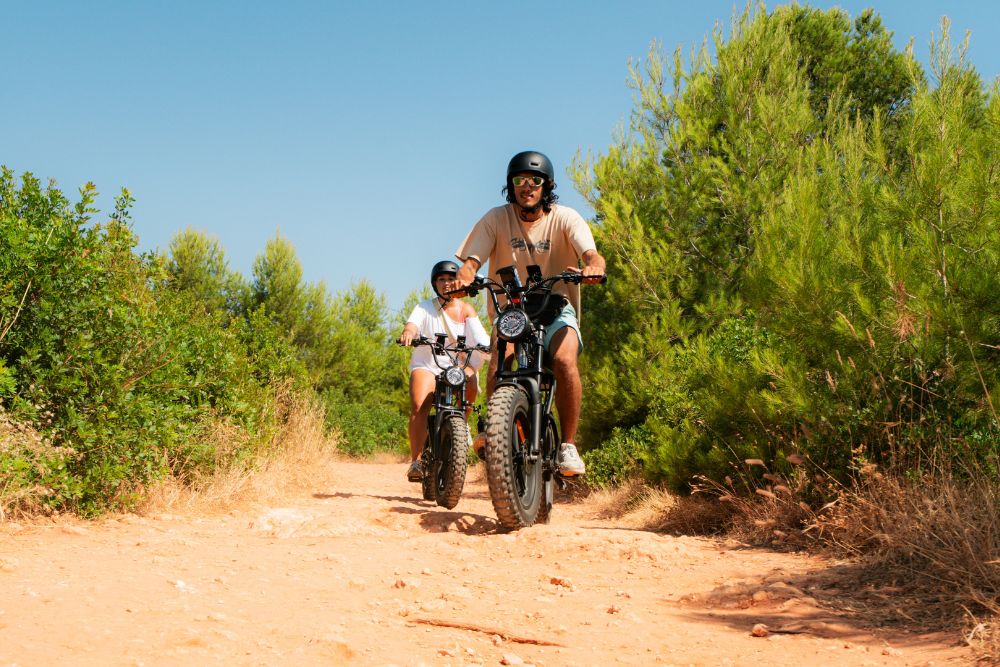
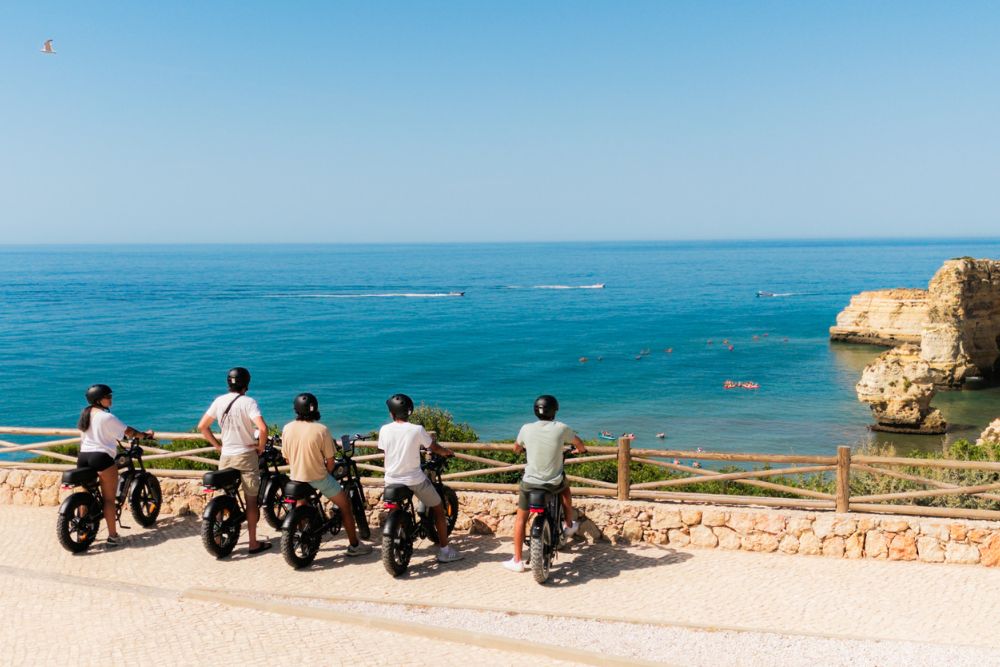
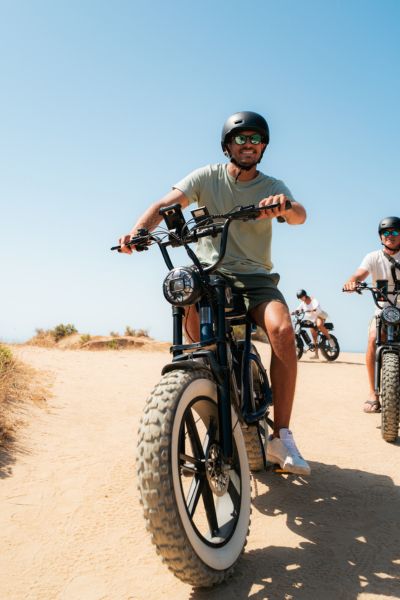
Conducted on electric bicycles, the tours offer a different perspective on the region, encouraging visitors to look beyond its reputation as a beach destination. For Mário Afonso, the mission has always been straightforward: “To share as much as possible of the local spirit and offer a genuine insight into life in Portugal.”
The idea behind Mozka Coast Tours is closely tied to Mário’s own story. Born in Portimão, raised in Lagoa and with strong family ties to Ferragudo, he spent 12 years living in Mozambique, returning to the Algarve each summer before eventually settling back in Portugal for good.
After completing his studies in Sports and working as a personal trainer, he decided it was time to fulfil another long-time ambition: travelling the world.
Over a year and a half, he travelled through Sri Lanka, India, Nepal, Vietnam, Indonesia, Thailand, Malaysia, Mexico, Colombia, Peru, Bolivia, and Brazil. Those journeys transformed the way Mário viewed both travel and tourism.
He realised that the most memorable experiences rarely happened at the most famous landmarks, but instead through conversations with the locals, time spent in small communities and visits to places that seldom feature in guidebooks.
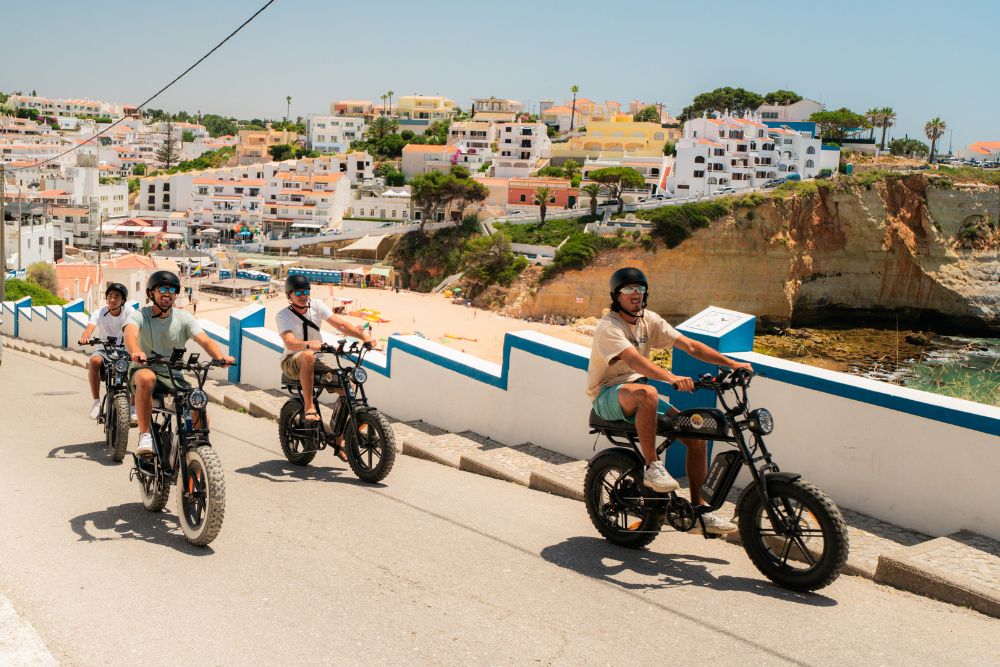
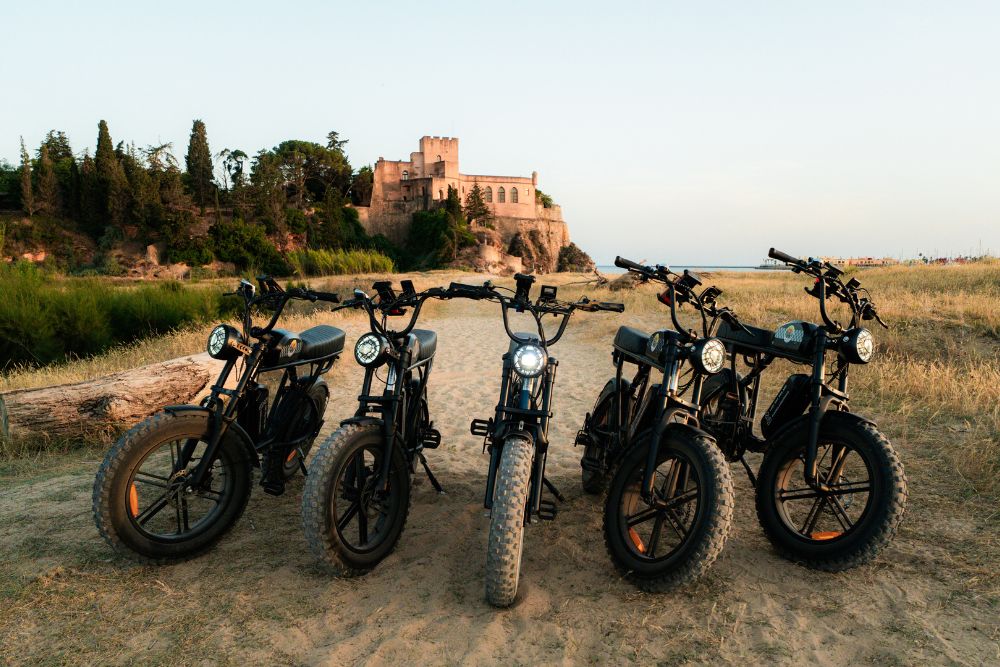
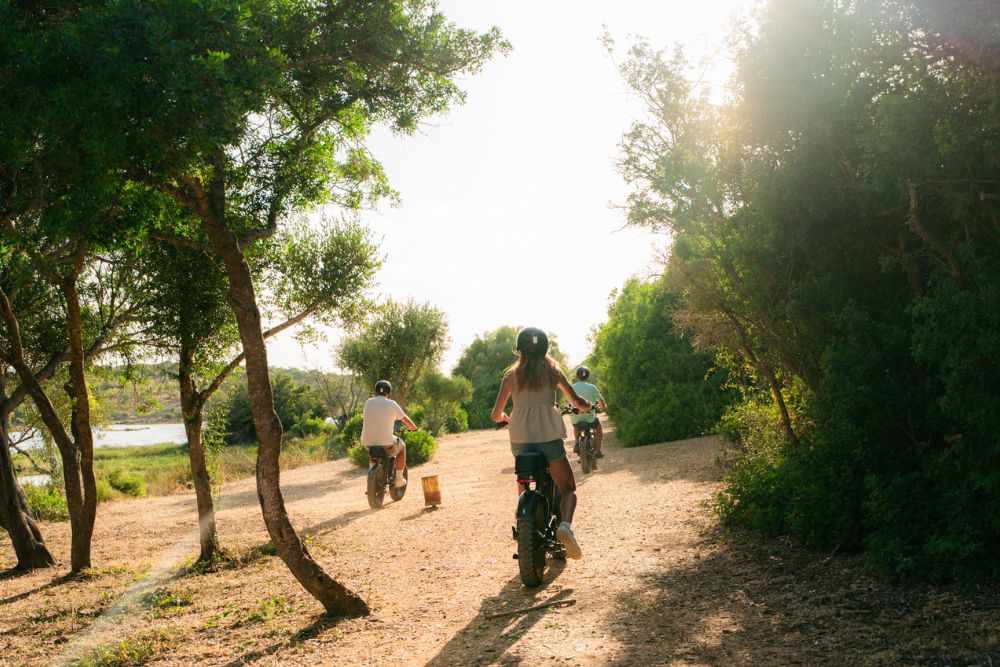
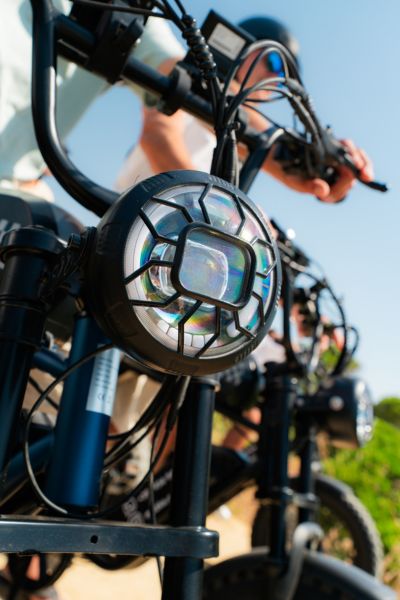
Back in the Algarve, he began rediscovering the region he had known since childhood, seeking out routes that offered a different perspective on familiar landscapes. Many of those trails are only accessible thanks to the e-bikes that he personally picked out and assembled.
The concept of Mozka was inspired by the sense of freedom he experienced whilst travelling through Vietnam by motorbike, combined with a desire to bring together two of his greatest passions: tourism and physical activity. “I quickly realised I wanted to lead tours, making the most of my knowledge of the region,” he explains.
Mário’s family history is also woven into Mozka Coast Tours. His mother, Carla Oliveira, and stepfather, André Cunha, played a key role in bringing the project to life, helping with everything from administration and logistics to preparing the tours and setting up the shop.
The name itself reflects both those family roots and the years they spent living in Mozambique. It was Carla who chose the name “Mozka”, originally for the local accommodation she owns and manages next to the family home, where the tour shop is now based.
“We brought Mozambique with us because, for us, it was home, it was our safe haven. That’s the feeling we want to share here – a family home where everyone feels welcome from the moment they arrive,” she explains.
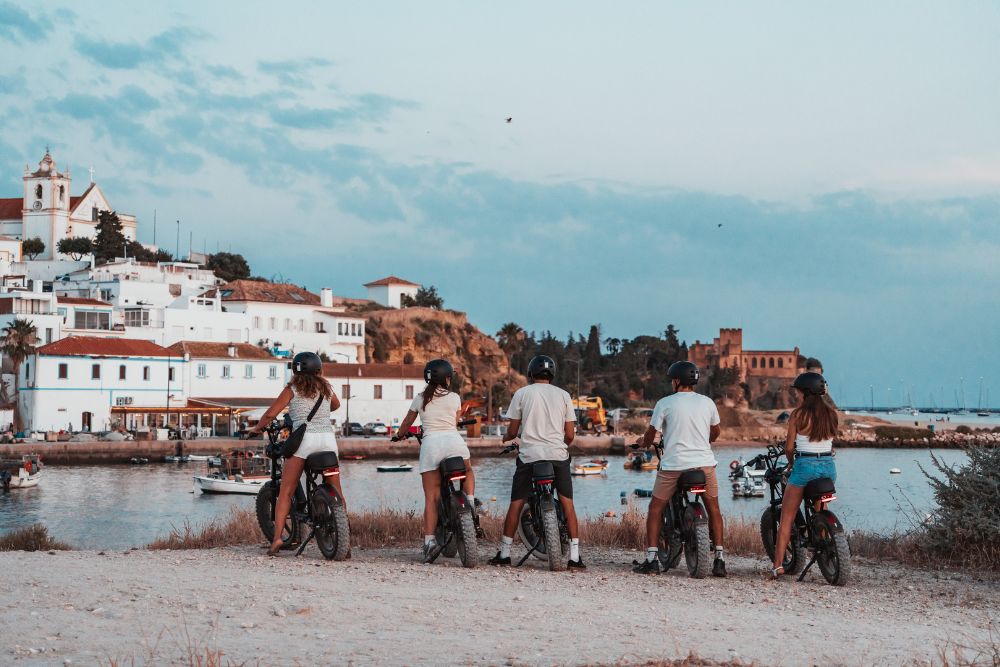
That sense of hospitality naturally extends to the tours, where the personal approach is one of their defining features. Both private and group experiences are available, all designed for beginner and intermediate cyclists. Group sizes are kept small, usually no more than four participants, allowing each route to be adapted to individual interests, pace and curiosity. “I believe that’s how everyone gets the best experience, with time to ask questions and share stories,” says Mário.
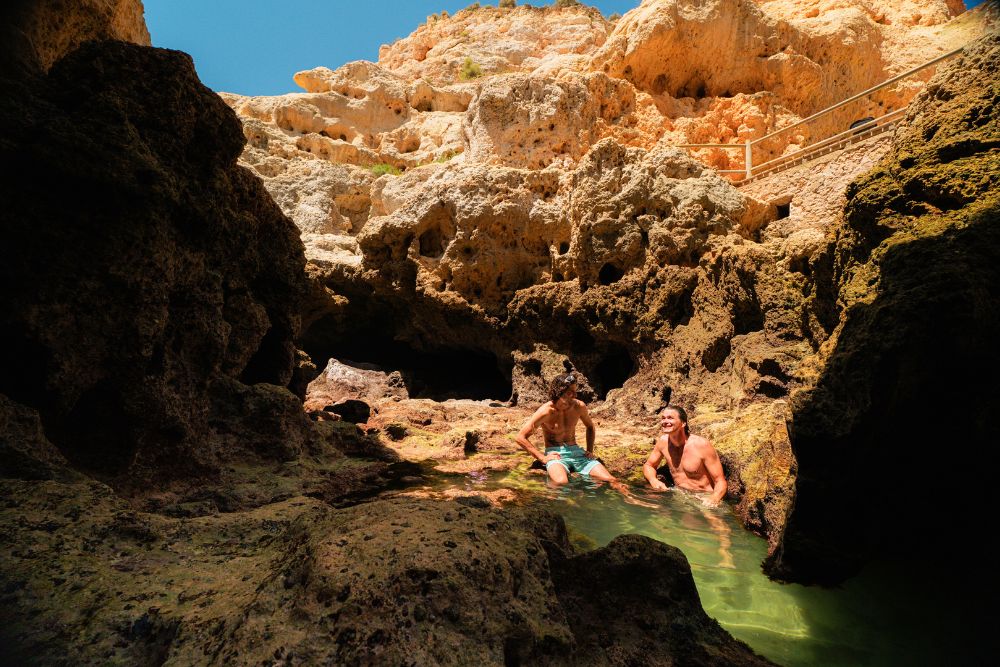
Alongside the Golden Coast Tour, which passes through Ferragudo, Carvoeiro, the Benagil caves and Praia da Marinha, the programme also includes routes around Silves, Portimão, Alvor and Ferragudo, focusing on places where local traditions continue to shape everyday life.
In Silves, once the capital of the Algarve’s Islamic kingdom, participants discover the Arab influence still visible in the town’s architecture, narrow streets and surrounding agricultural landscape, whilst learning about key moments in its history.
The tour also explores the importance of farming and citrus production to the local economy and includes a tasting of freshly squeezed orange juice made from locally grown fruit. Throughout the route, Mário draws connections between different historical periods, explaining how Roman, Islamic and Christian influences continue to shape the town’s identity.
In Portimão, the focus turns to the Arade River and the history of the canning industry and sardine fishing, activities that shaped generations of Algarvian families. Beyond the beaches and marina, the tour reveals a city whose identity has long been defined by its relationship with the sea.
Alvor offers a different atmosphere altogether. The former fishing village has retained its own rhythm, where traditional boats bob alongside narrow cobbled streets and life remains closely connected to the estuary. The same is true in Ferragudo.
As the tour winds through the village, Mário greets neighbours, fishermen and local shopkeepers, offering visitors a glimpse into a close-knit community where personal connections continue to play an important role.
After travelling across Asia and South America, it was precisely that sense of belonging that drew him back to the Algarve. “I love the peaceful way of life here. Big cities have never appealed to me. I’d much rather live in Ferragudo, where everyone knows each other and people are always willing to lend a hand,” he says.
As the project continues to evolve, Mário hopes to develop new experiences that combine heritage, nature and meaningful connections with the local community.
Plans for the future include activities linked to the region’s natural heritage and traditional fishing, reinforcing an approach that encourages visitors to discover an Algarve beyond its best-known landscapes.
Follow Inside Algarve Magazine on Instagram and Facebook for more news!
Read also: