
The Portuguese-Brazilian artist brings together wildlife, imagined landscapes and Portuguese influences in her instantly recognisable paintings
Some artists seek to portray the world as it is, whilst others choose to reinvent it. For Fernanda Eva, painting has become a way of creating places where beauty, colour and nature coexist in perfect harmony.
Depicting animals, Portuguese tiles, imagined landscapes and tropical paradises, the Portuguese-Brazilian artist has developed an instantly recognisable visual language, marked by an explosion of colour that reflects her outlook on life.
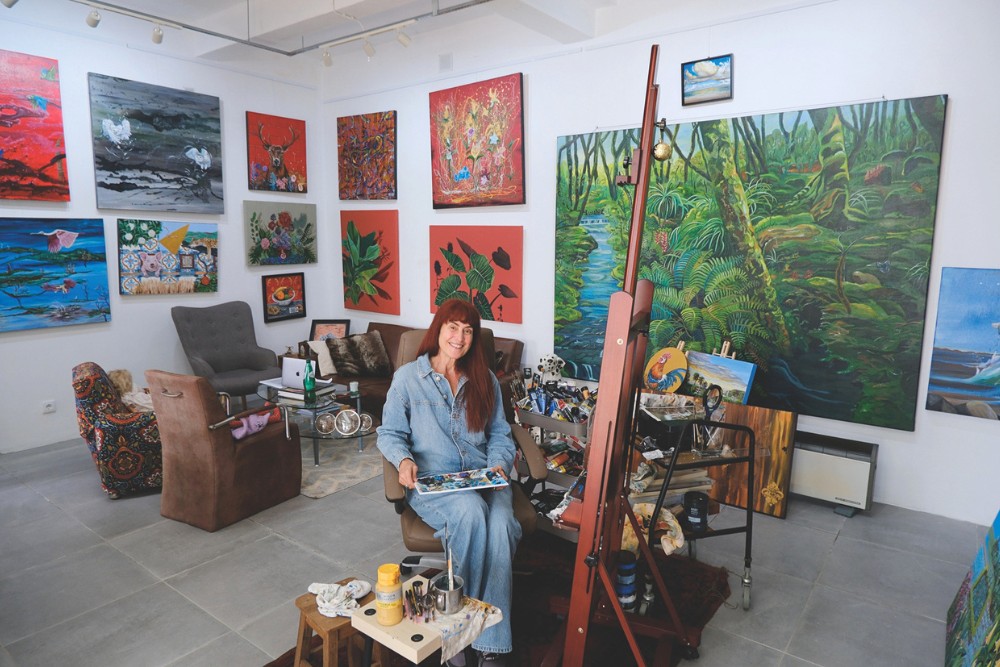
Born in São Paulo, Brazil, Fernanda Eva moved to Portugal 11 years ago in search of something she now considers essential: tranquillity. In Monchique, she found the ideal setting to continue developing her work whilst maintaining a strong connection to her homeland.
Her artistic path is as multifaceted as her paintings. Trained in Theatre, Photography, Communications and Fine Arts, she later completed a master’s degree in Visual Poetics at the University of São Paulo. Today, she divides her time between studios in São Paulo and Monchique.

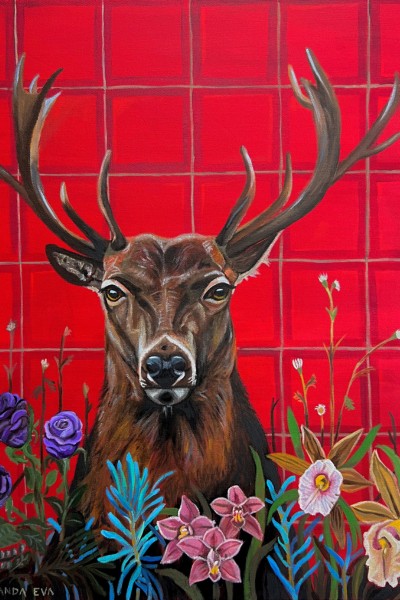
Art was not a central part of her childhood, but that changed in 1993, when she began studying traditional academic oil painting. From that point onwards, her fascination with the medium continued to grow.
Regular contact with other artists and creative environments helped her realise that painting was more than just a passion.
“I became interested in exploring more complex themes and visiting museums and galleries,” she recalls. “Observing the work of other artists contributes enormously to our own growth.”
In 2015, she decided to move to Portugal following a life-changing event. The previous year, her home in São Paulo had been burgled, prompting her to rethink the kind of life she wanted to lead.
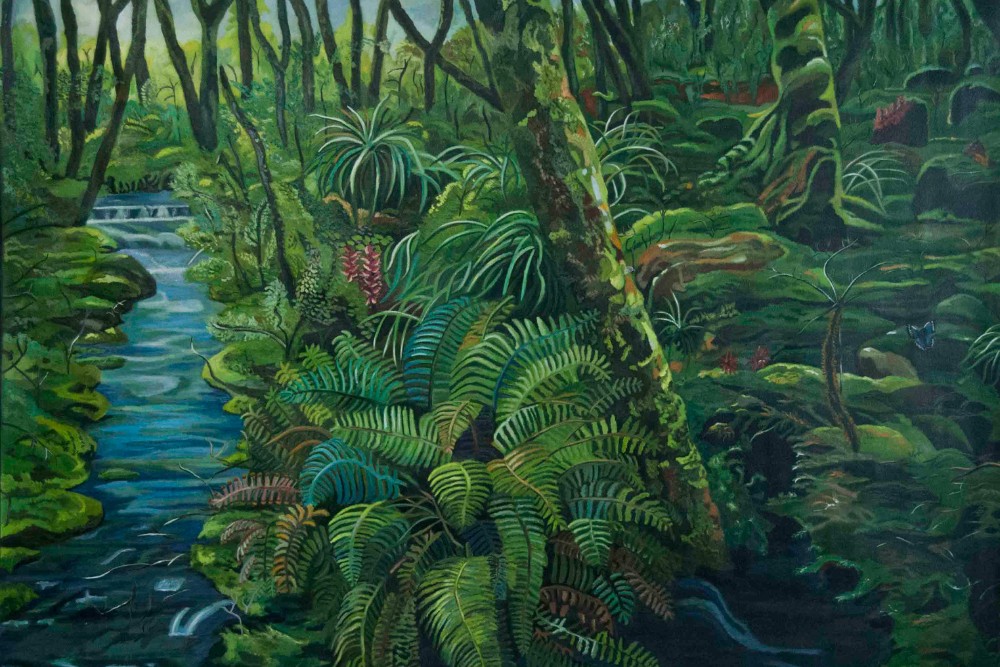
What began as a trip around Europe ultimately became a permanent move. She first settled in Porto through an artist residency programme and later, in 2019, relocated to Monchique, where she produced and presented her first exhibition in southern Portugal at Galeria Porca Preta.
There, she discovered a special connection with both the landscape and pace of life in the Algarve.
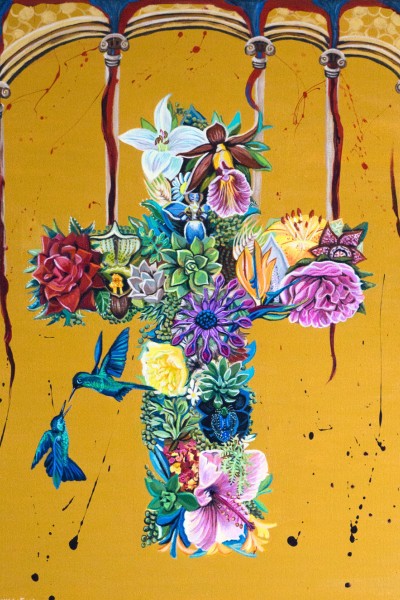
“I really enjoy this peaceful and safe way of living. Having a studio open to the public where I can paint quietly is wonderful,” she says.
The duality between Brazil and Portugal remains deeply embedded in Fernanda Eva’s artistic identity. The vibrant colours and energy she carries from her Brazilian roots now coexist with the cultural and aesthetic references she has absorbed since moving to the Algarve.
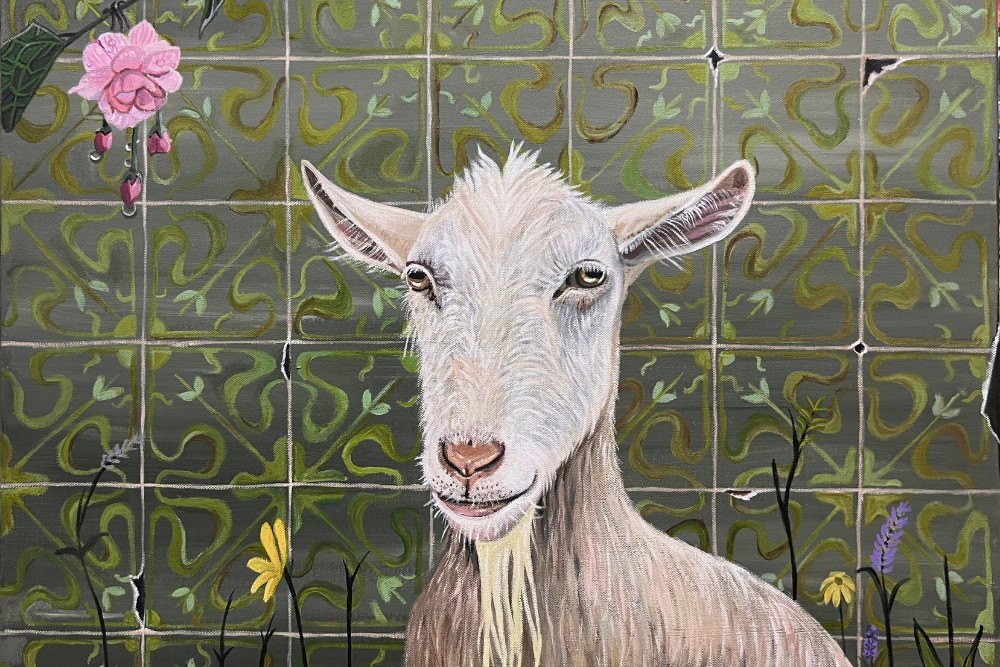
That influence is particularly visible in her series inspired by Portuguese azulejos.
Captivated by the historic façades of Porto and Lisbon, she began reinterpreting traditional tile patterns on large canvases, often incorporating animals, natural elements or contemporary narratives.
“Tilework is an ancient art form, full of fascinating colours, shapes and contrasts that help define each culture,” she explains. “I was enchanted by the churches in Porto, with their walls covered in azulejos that tell stories, as well as the older pieces dotted around the streets.”
A sense of well-being runs through all her work, with colour playing a central role. Fernanda Eva favours bold tones, luminous landscapes and compositions that seem to resist pessimism altogether.
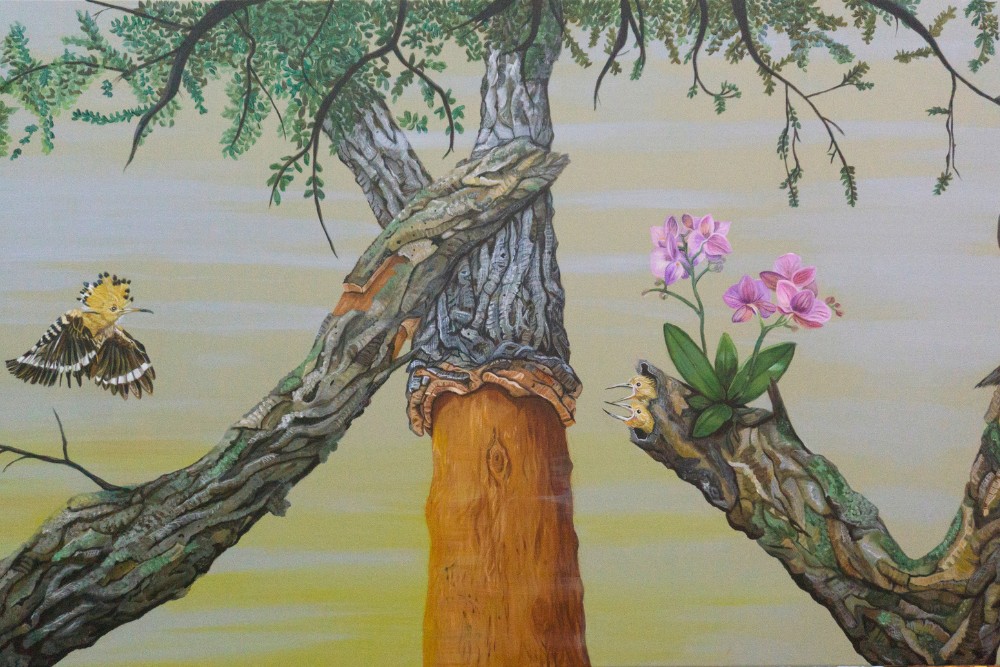
“The theme of my master’s degree was ‘Paradise’. Through my paintings, I try to create places of well-being. I always think about painting something positive that can bring people joy,” she says.
Fernanda Eva believes art can have an unexpected impact on people’s lives and help them through difficult moments.
“One client bought a painting of an indigenous figure and told me it gave her strength whilst her daughter was facing health issues. Art can truly have an effect we never imagine when we’re making it,” she reveals.
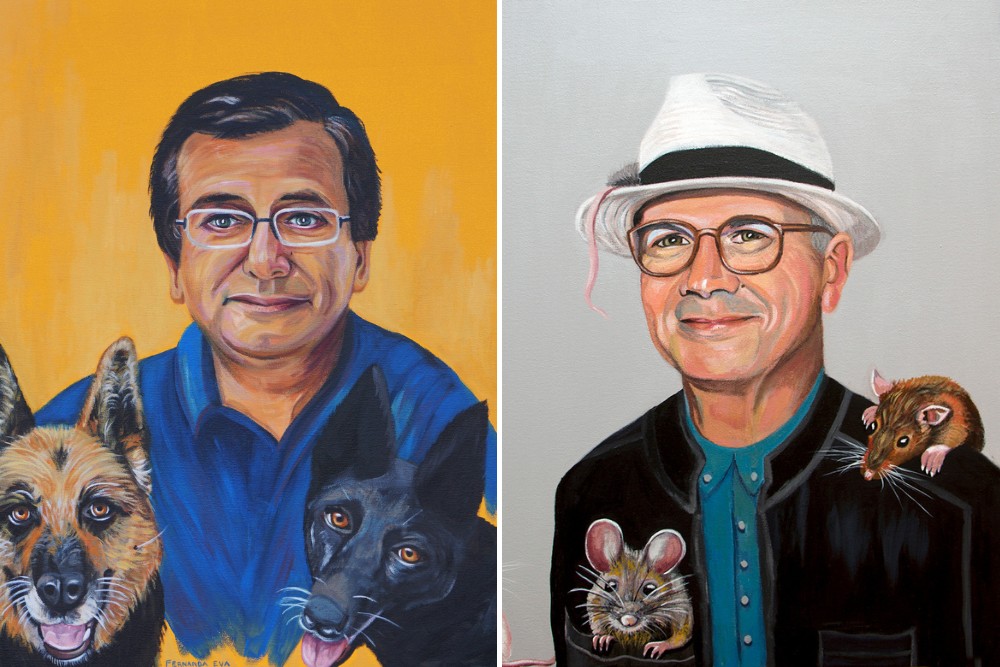
The artist also accepts private commissions, particularly portrait work. Some are commissioned directly by the subjects themselves, whilst others are requested by family members as gifts.
In recent years, the Algarve has become an increasingly important presence in her work. Inspired by the region’s landscapes, ecosystems and the recovery of areas affected by wildfires, she has entered a new creative phase.
When she first visited Monchique, the hills were still heavily scarred by the devastating 2018 fires. The destruction and the absence of birdsong left a lasting impression.
“Today, every time I hear a new bird call, I try to discover which species is drawing my attention and might become the subject of a painting,” she says.
This fascination has led to an extensive body of work dedicated to wildlife, particularly endangered species. Dodos, Spix’s macaws and many other birds and animals become protagonists in compositions that combine visual beauty with environmental awareness.
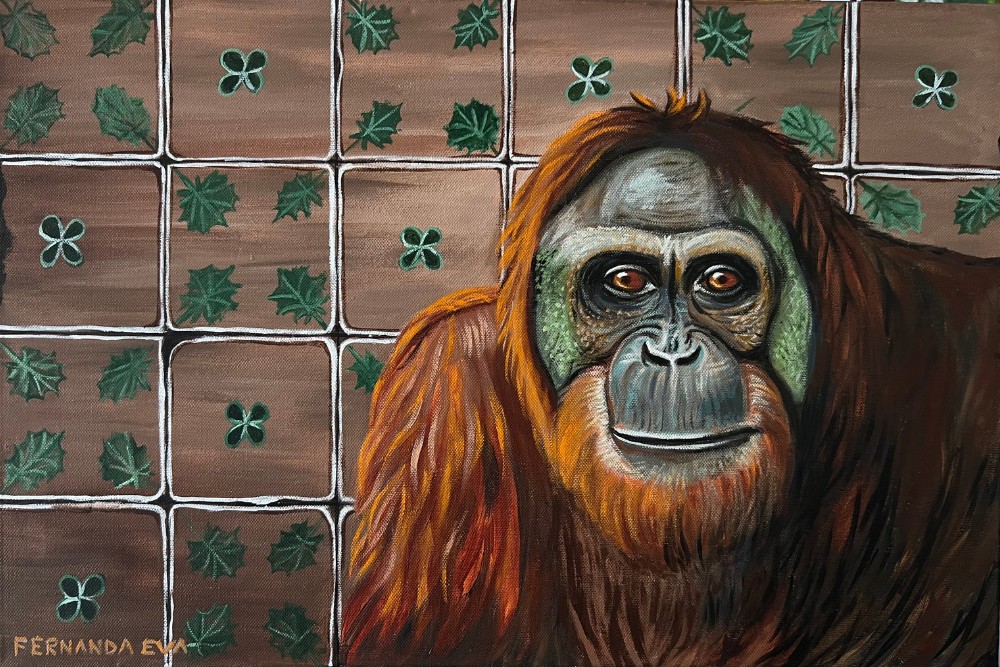
For Fernanda Eva, art also has an important role to play in encouraging reflection on environmental issues.
Beyond nature, she draws inspiration from travel, photography, memories, everyday situations and even simple plays of light and shadow. Sometimes she photographs elements that later appear in her paintings; others, she combines multiple images to create entirely imaginary settings.
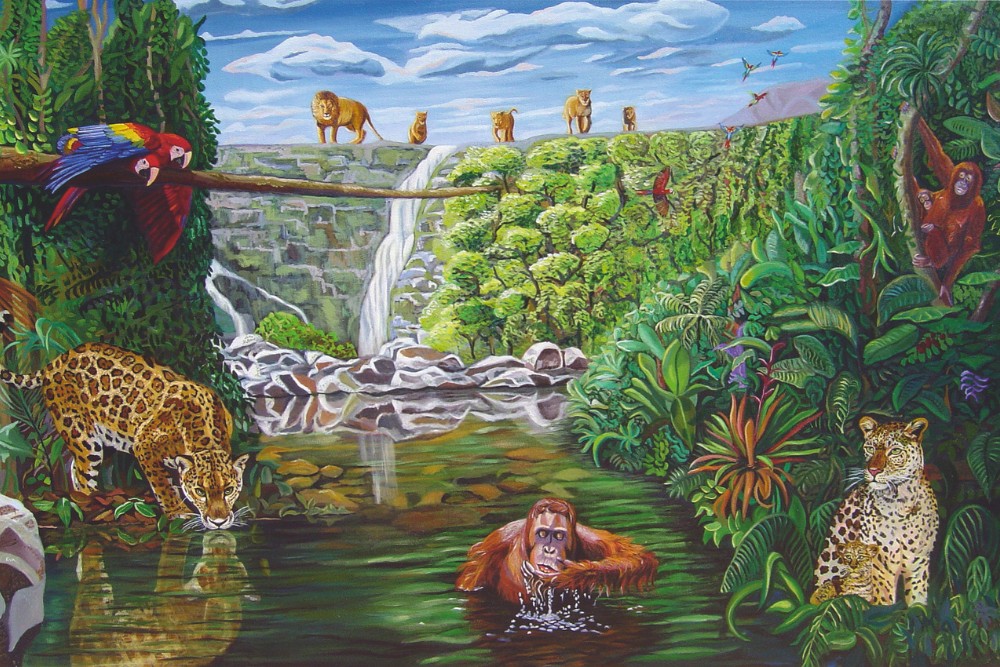
Throughout her career, she has shown her work internationally and participated in numerous cultural projects. Among the works she remembers most fondly is Zoológico I, her first large-scale painting, “a 2m by 4m landscape filled with animals, creating perfect harmony between species that would never coexist in reality”, which later inspired her move into mural painting.
Another notable project was a multimedia exhibition presented in several Brazilian art spaces, centred on a question posed to friends and collaborators: “Why does the contemporary artist still paint?”.
In Portugal, several works have also attracted attention, including a mural at Caves de Santa Marta in Santa Marta de Penaguião (in the Douro region) and the paintings she has exhibited for more than a decade at the annual art exhibition held at Mosteiro de Grijó, in Vila Nova de Gaia, each July.
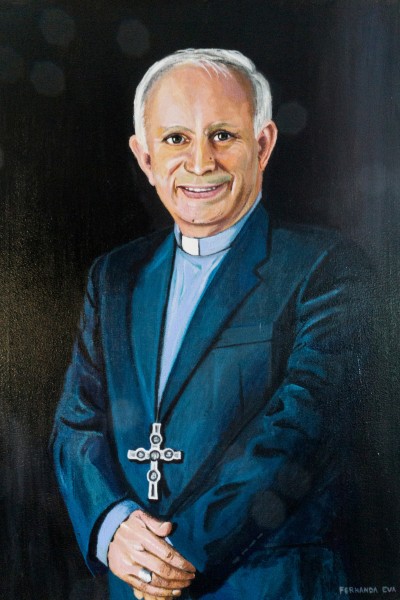
One particularly meaningful work was a portrait of the late Bishop of Porto, which Fernanda Eva painted as a tribute following his death. A regular presence at the exhibition openings at Mosteiro de Grijó, he had long inspired her through his reflections on the power of art and the role artists play in society.
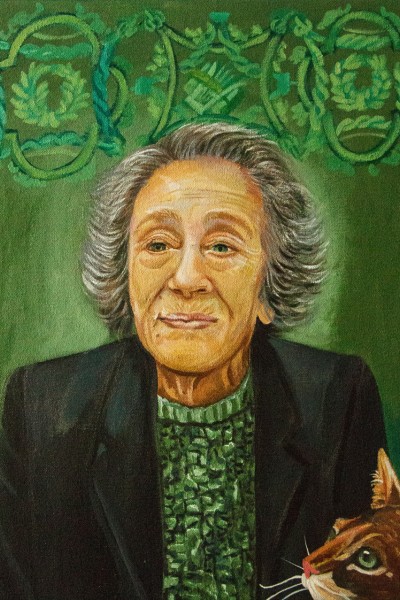
Another particularly personal work is a portrait of Manuela de Azevedo, the first Portuguese woman to hold a professional journalist’s licence. Having spent time with her during the final years of her life, Fernanda Eva decided to paint her alongside her cat as a tribute.
Manuela de Azevedo lived to the age of 105, and the portrait is now part of the collection of the museum in Constância.
Despite international recognition, Fernanda Eva’s ambition remains remarkably simple. Through her work, she hopes to bring happiness and positive emotions to those who come across it. Looking ahead, she also dreams of publishing a book bringing together her complete body of work.
Follow Inside Algarve Magazine on Instagram and Facebook for more news!
Read also:
A wild success: Lagos Zoo marks more than two decades of wildlife conservation