
Float into Sound combines vibration and sound with the sensation of being suspended
Wrapped in silk, suspended just above the ground and surrounded by sounds, Float into Sound – Silk Hammock Meditation offers an unusual approach to meditation.
Led by Margarida Leite e Pereira at Vila Vita Spa by Sisley Paris, the experience is intimate and deeply sensory, designed to draw attention away from the outside world and towards the body, breath, and sound.

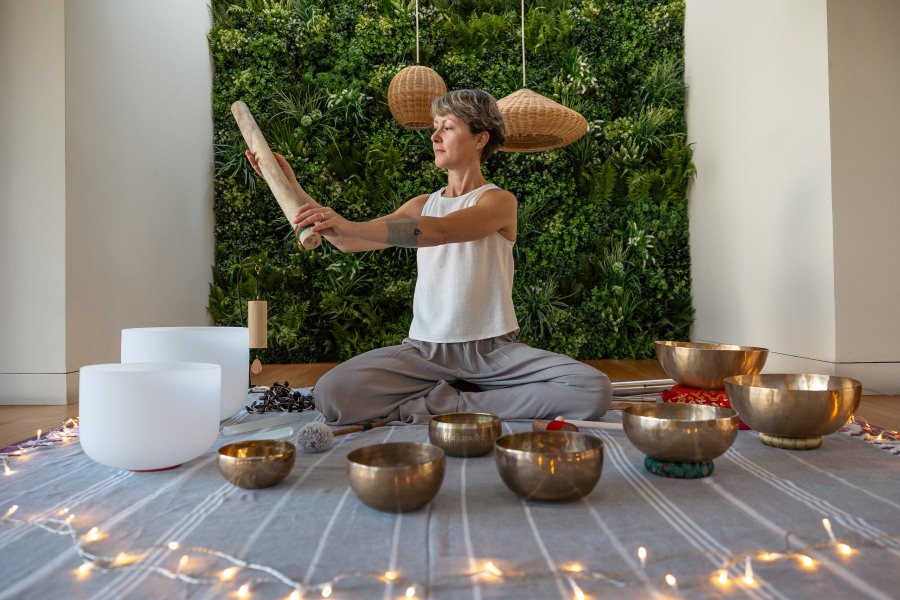
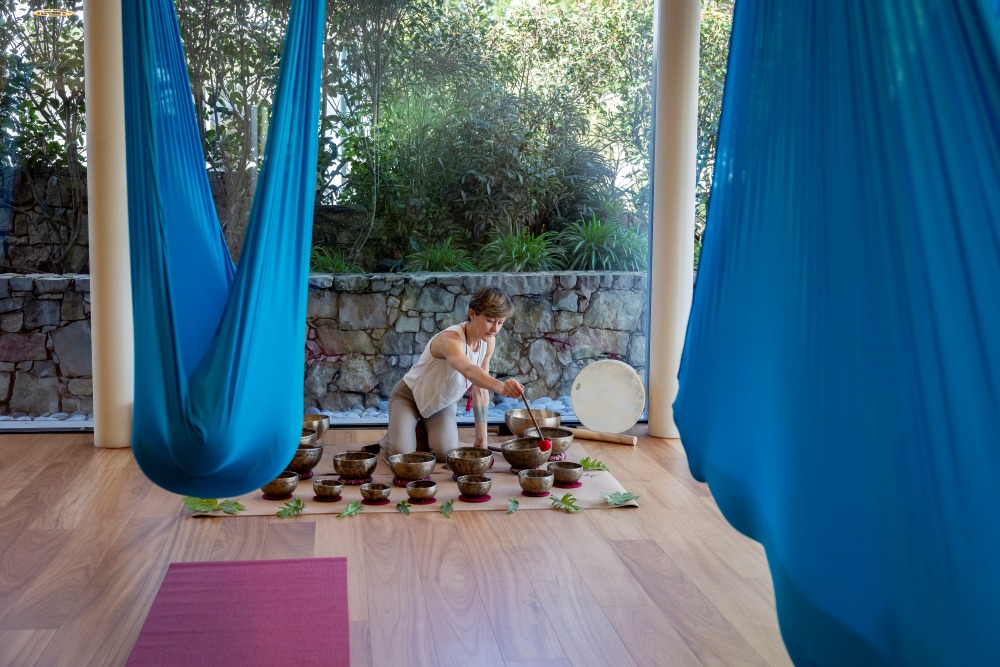
Participants lie back in stretchy silk hammocks suspended a few centimetres above the floor, cocooned by the sounds and vibrations of Tibetan singing bowls, bells, chimes, and other instruments.
There is little movement involved. Instead, the sensation of floating, combined with sound travelling through the fabric and the body, creates an immersive, almost three-dimensional form of meditation.
New to the resort’s wellness programme, Float into Sound was also made possible by the setting itself. With its exceptional acoustics, glass walls, and views into the treetops, the yoga studio at Vila Vita Spa provides a particularly fitting backdrop for the experience.
The hammock itself is central to the experience. Unlike lying on a mat, the fabric surrounds and supports the body, responding gently to even the smallest movement.
“Lying in the stretchy silk rather than on the floor evokes the feeling of being in the womb: held, enveloped, and gently rocked, as though returning to a place of protection and safety,” explains instructor and therapist Margarida Leite e Pereira.
There is also a greater sense of physical freedom. “It allows us to stretch in a different way. There is also the feeling that sound and vibration can reach the whole body without rigid barriers such as the floor or a chair,” she adds.
This absence of physical constraints is part of what distinguishes Float into Sound from more conventional forms of meditation.
There is no perfect posture to maintain and little need to think about how the body is positioned.
Margarida begins each session with two or three Pranayama breathing techniques, before participants settle into their hammocks, “almost as though they were in a nest, hanging from a tree and surrounded by sound”.
Cushions, blankets, and eye masks can be added for comfort, helping shift the focus almost entirely towards listening and relaxation. What happens next varies considerably. Some participants fall asleep, others remain completely alert, and some drift somewhere in between, entering an almost dream-like state.
Rather than trying to achieve a particular response, Margarida encourages participants simply to notice what they hear and feel: “Bring your attention to the sounds, noticing their effects without becoming attached to any one of them, remembering that the same sound can have very different effects from person to person and from one day to another.”

Her emphasis on comfort and creating a reassuring environment also means that no previous meditation experience is required.
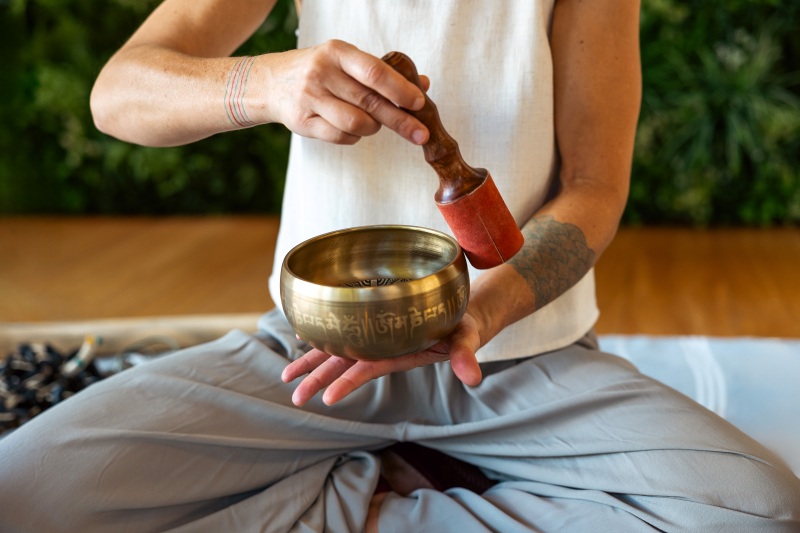
Sound, naturally, is at the heart of the session. Tibetan singing bowls are used most frequently, alongside a tingsha bell and, depending on the session, a rainstick, wind chimes, drum, crystal bowls, monochord, or shruti box.
“Sound affects our bodies in different ways: it activates specific areas of the brain and can awaken emotions and memories, as well as bringing about changes in the nervous system,” says Margarida.
She points to Nāda Yoga, an Indian yogic tradition in which sound is used as a means of developing awareness and encouraging inner transformation.
As different frequencies, tones, and rhythms move through the space, they repeatedly bring the mind back to the present. The purpose is not to promise some instant transformation, but something altogether simpler: a conscious pause, with time to notice what is happening in the body and mind.
What remains afterwards is, above all, a sense of inner quiet. Not because every thought has necessarily disappeared, but because, for a little while, those thoughts have ceased to demand all your attention.
In lives so often defined by movement and distraction, Margarida believes that contrast matters. “Meditation gives us the opportunity to meet ourselves in the present moment,” she says. More importantly, she hopes participants leave with “the understanding, or reminder, that stillness is just as important as movement”. And perhaps that is the most unexpected part of Float into Sound: the permission to do very little. To lie back, breathe, listen, and allow the silk to hold the body whilst sound fills the space.
Float into Sound is limited to seven participants per session and is available to both Vila Vita Parc guests and outside visitors, with advance booking through the resort’s website.
Follow Inside Algarve Magazine on Instagram and Facebook for more news!
Read also: