Whilst a lot of attention in the autumn is aimed towards migrating birds, a common bird here in the Algarve is busy collecting its food supplies for the colder winter months
– September 9, 2022
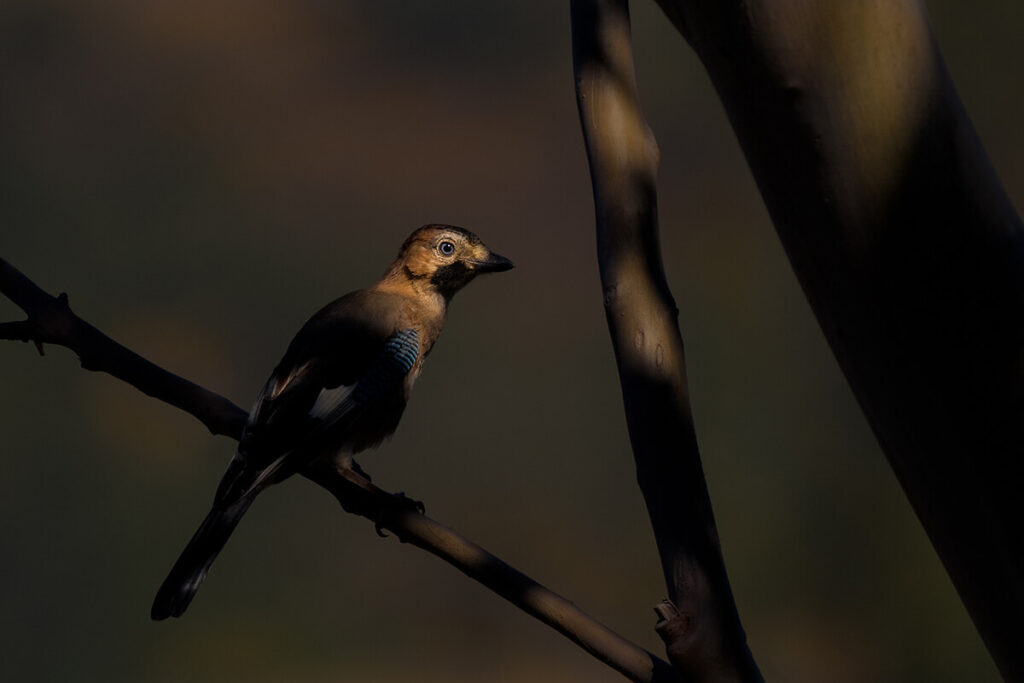
The jay, or to be precise, the Eurasian jay is a common bird throughout the Palearctic Region and thrives in Portugal. They belong to the Corvid family (otherwise known as the Crow family) and are unmistakable with the complex colour of their plumage. Most of the plumage is pinkish brown with a white crown, forehead and rump, and the wings have bright blue colouring with black stripes. Their length is around 35cm with a wingspan of up to 58cm. It may be my imagination but, here in Portugal, they seem slightly larger than those found in northern Europe.
Often you hear jays before you spot them. They are very vocal with their loud angry-sounding screech call. They often mimic other birds, particularly the calls of birds of prey. I have had debates in the past whether the call, which is similar to a common buzzard, is indeed a mimic or, as I think, one of their natural voices that sounds similar. For me, the debate continues.
Although populations of jays seem to be thriving in Portugal (they are protected from hunting which helps), they do not usually form flocks but prefer to live a solo life. Even mating pairs do not seem to spend much time together but will form an alliance to defend a territory. I often see jays mixed into flocks of Iberian magpies during the spring and summer months, possibly due to a share in the food source and, of course, safety in numbers from birds of prey.
During mating, both the male and female will build a nest in a tree branch fork where a clutch of up to six eggs are laid, with only one brood being raised annually. Only the female sits on the eggs whilst the male feeds her. Almost three weeks later, the eggs hatch and both parents share the duty of feeding the young. The young fledge after another three weeks and are fed until around eight weeks old.
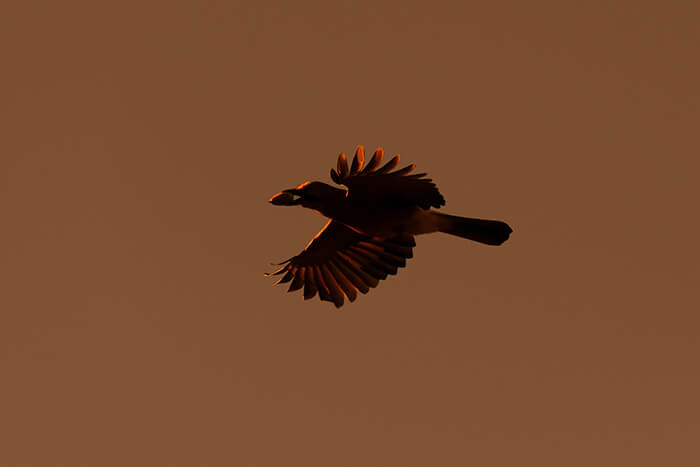
Garrulus glandarius, the noisy acorn harvesters
Their scientific name is interesting, Garrulus glandarius. Garrulus meaning ‘noisy’ and glandarius meaning ‘acorn harvest’. Jays are well-known for helping the spread of oak tree forests and it is during the autumn when this occurs. Oak trees are rich with acorns in the autumn with a limited lifespan on the trees before they fall. Jays are omnivorous, however, although in the winter and spring months prefer protein rich acorns.
Due to the limited timeframe of an acorn on a tree, they spend autumn collecting as many as they can and store them in caches for consumption later. Studies have shown that they can cache 5,000 acorns and remember where most of them are! The ones that are forgotten or not consumed may germinate and grow into oak trees making them responsible for the increase in woodland.
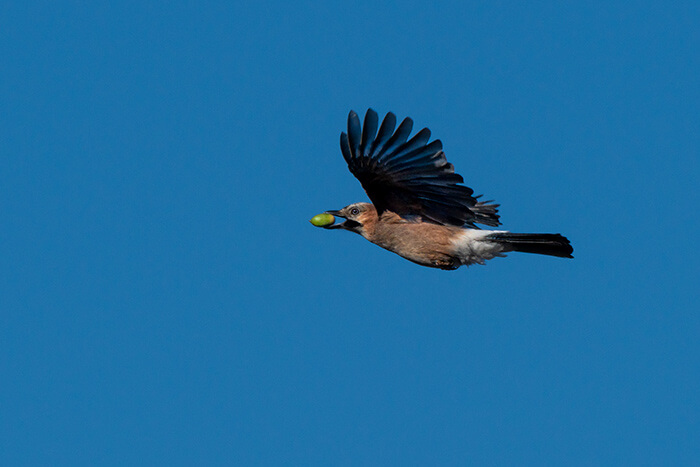
You’ll often see jays with what appears to be a single acorn held in their beak. However, they usually have quite a few more inside their gullet to enable them to harvest, move and store them efficiently. I have recently read a study that shows they are particularly fussy over the acorns they select from a tree.
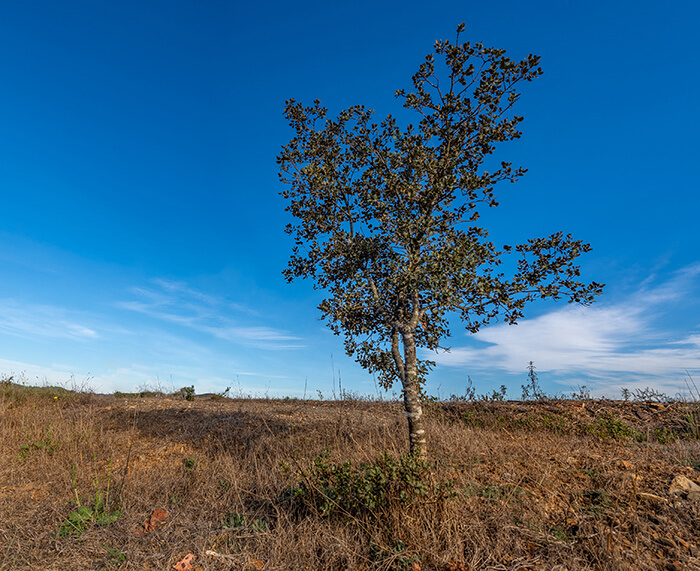
Next time you spot an oak tree which is solitary to others, it is possible it may have been planted by a Eurasian jay!
Text & Photos Craig Rogers
Craig Rogers is a Wildlife and Nature photographer from Wales now living in the Algarve providing Photography Workshops in Parchal. More information, photographs, and blog can be found on his website at