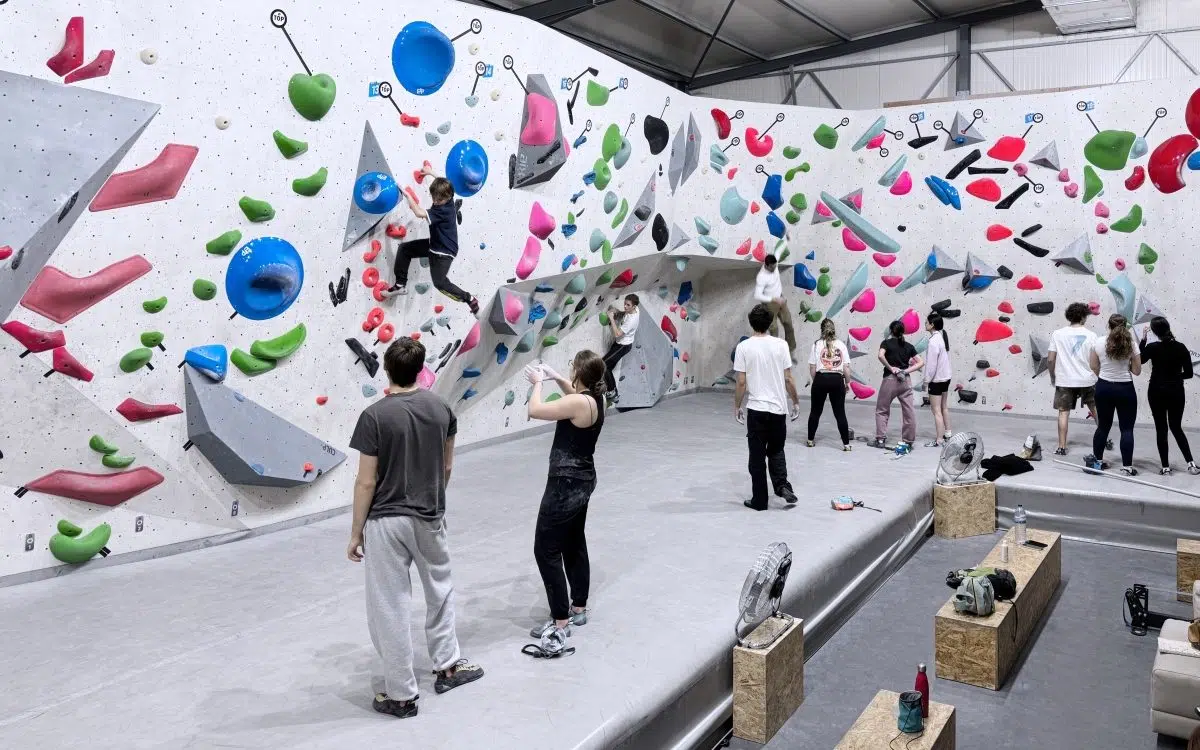
In Estômbar, a community-driven climbing space offers safe indoor training, competitions and 14 levels of difficulty for all abilities
What began as a group of friends sharing a love of climbing has grown into one of the country’s most recognised indoor climbing gyms.
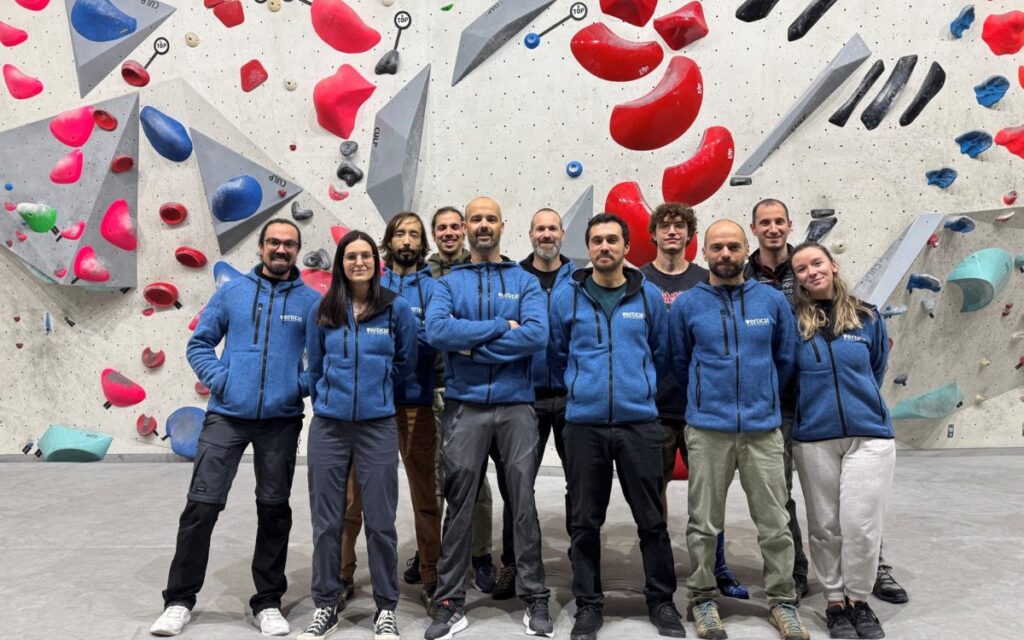
Vertical, initially born at the Quinta de São Pedro Sports and Recreational Association (ADR-CCS), emerged from the passion of brothers Nuno and Ricardo Sacramento, from Lagoa, and Valter and Tiago Guerreiro, from Portimão.
In early adulthood they (some more than others) swapped BMX and MTB for rock climbing with ropes – an interest that only deepened with time.
In 2011, together with 13 friends, including Nuno’s wife Rita, they founded the Vertical ADR Climbing Centre (Vertical – Núcleo de Escalda da ADR). The idea was simple: train seriously indoors, build a community and compete.
Nine years ago, they moved into their current base at the Estômbar Municipal Park, thanks to a participatory budgeting project from Lagoa, becoming one of Portugal’s first dedicated indoor climbing spaces.
Today, a close-knit team of around 10 partners supports the project. Although each has a career in a different field, they devote much of their free time to climbing. Nuno and Ricardo work in audiovisual production, Valter in hospitality and Tiago in carpentry.
Alongside the Sacramento brothers, Mariana Gomes also coaches. Originally from Portimão, she first experienced indoor climbing in Prague, Czech Republic. After training at Vertical for three years, she continued progressing, and she is now the club’s strongest athlete and has even trained with the national team.
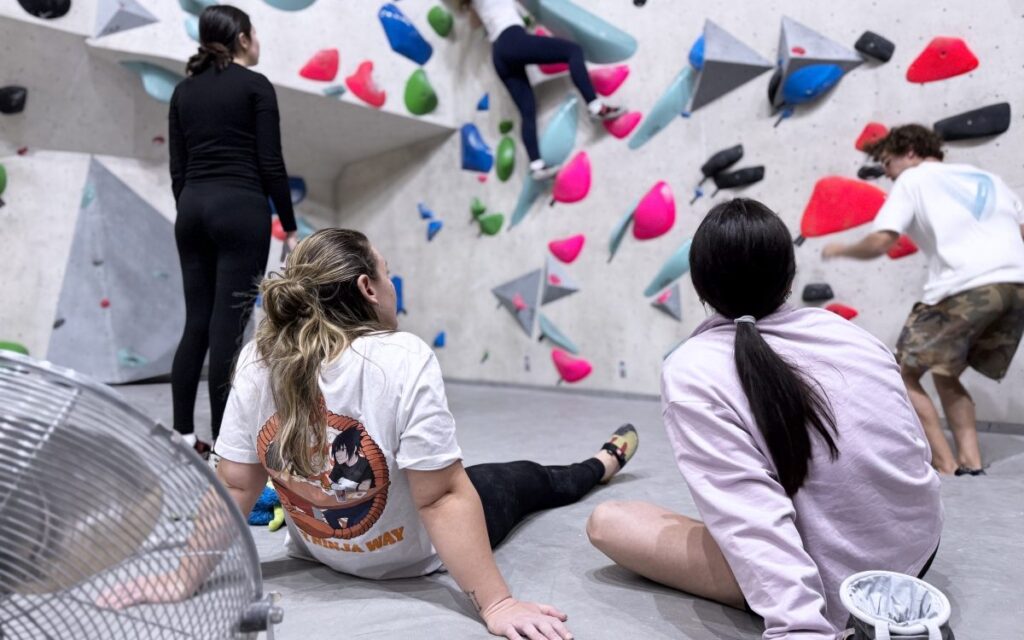
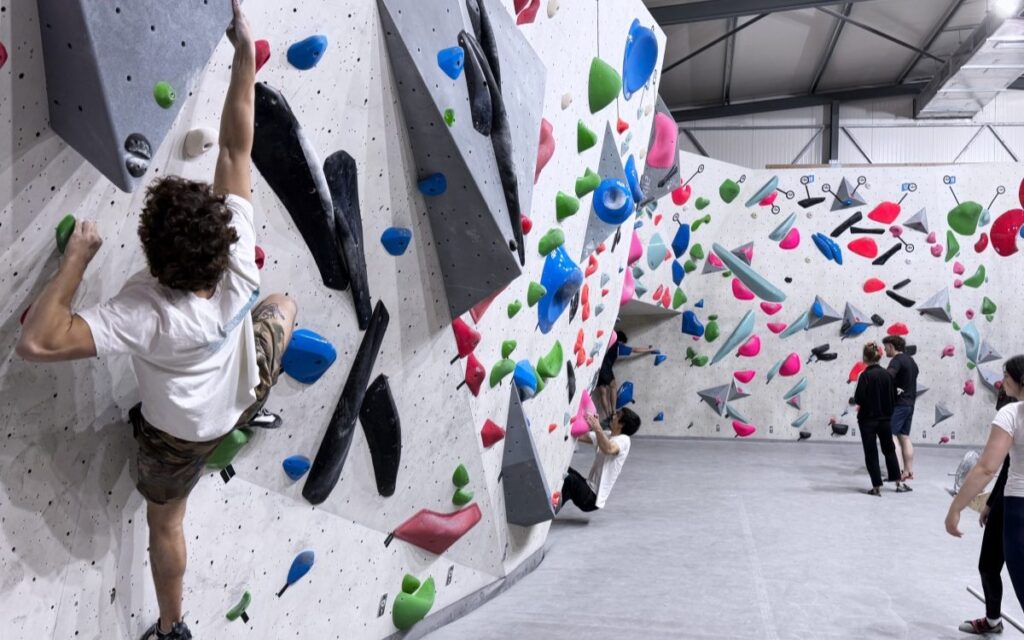
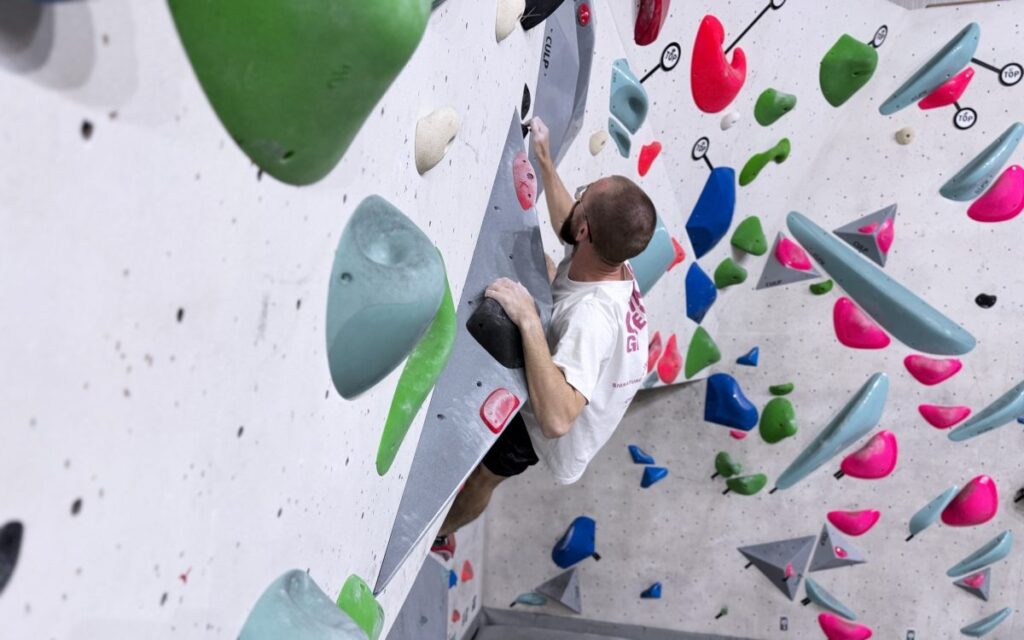
Of the three climbing disciplines – boulder, lead and speed – Vertical focuses on bouldering. Here, there are no ropes – just a 4.5-metre-high, 40-metre-wide wall packed with colourful holds and thick mats below to ensure safety.
Every three weeks, part of the wall is reset, and in competitions the route layout is a complete surprise.
Athletes are not judged on speed, but on focus and problem-solving ability. “Because the wall isn’t very high compared to rope climbing, the difficulty is condensed into this space. It’s far more explosive and much harder physically,” says Nuno, who designed the wall with Ricardo and Valter.
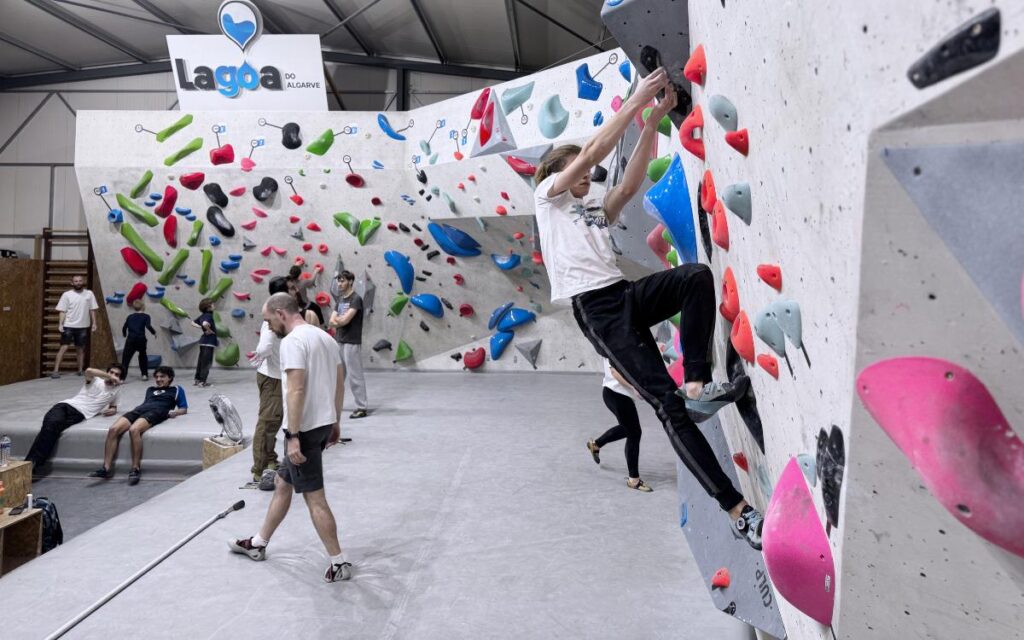
Within bouldering, there are different styles depending on hold size and route design, testing skills such as coordination, dynamic movement, strength and agility. Equipment hire is available on site, and Vertical offers 14 levels of difficulty, catering to both competitive athletes – with some holds identical to those used in the World Championships and Olympic Games – and beginners, who can choose from a wide range of accessible challenges.
Each colour corresponds to a level, marked at the base of the wall. However, the numbers are not always straightforward. “For example, someone might complete level 10, which is more strength-based, but struggle with level 6, which demands mobility,” Nuno explains.
“Each person sets their own training goals with the aim of challenging themselves physically and mentally.”
Progress depends on aptitude, consistency, balance and resilience. “Climbing is for those with a spirit of self-improvement, effort management and frustration control. It isn’t easy, but at the same time it brings motivation. Every time we climb, we manage to go a little further,” say founders Nuno and Ricardo.
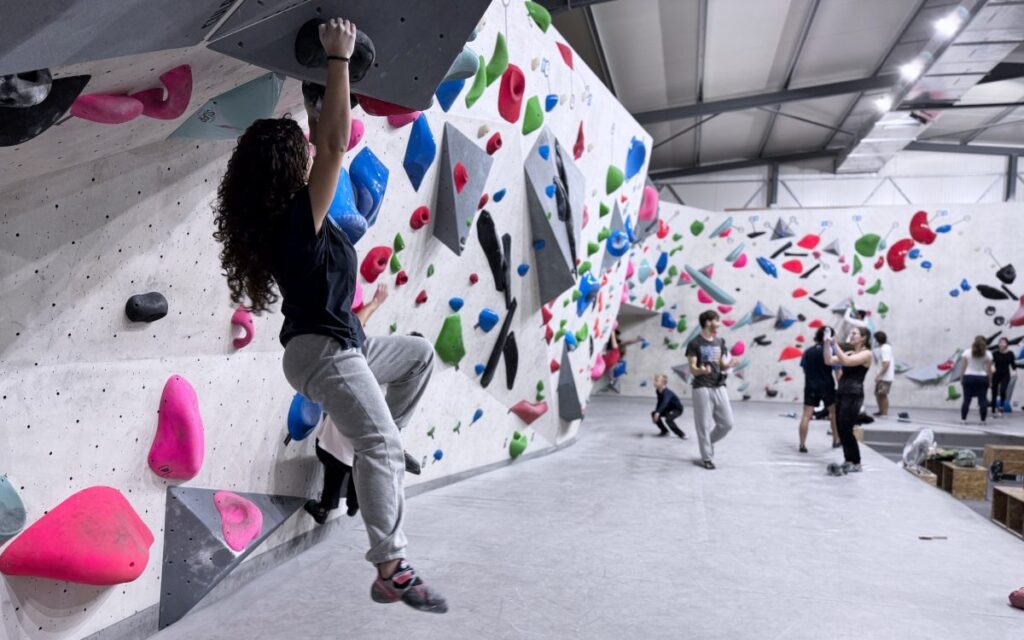
Although climbing is an individual sport, the atmosphere at Vertical is supportive and collaborative as climbers of different ages and abilities train side by side, sharing tips and cheering each other on.
Around 35 people take part in activities each day, aged between three and 82. Many were introduced to climbing here. Alongside open sessions, private lessons and small group classes (for up to five people) are available.
There is also VertiKids, a programme for children aged six to 12, with two coaches currently training 15 young climbers.
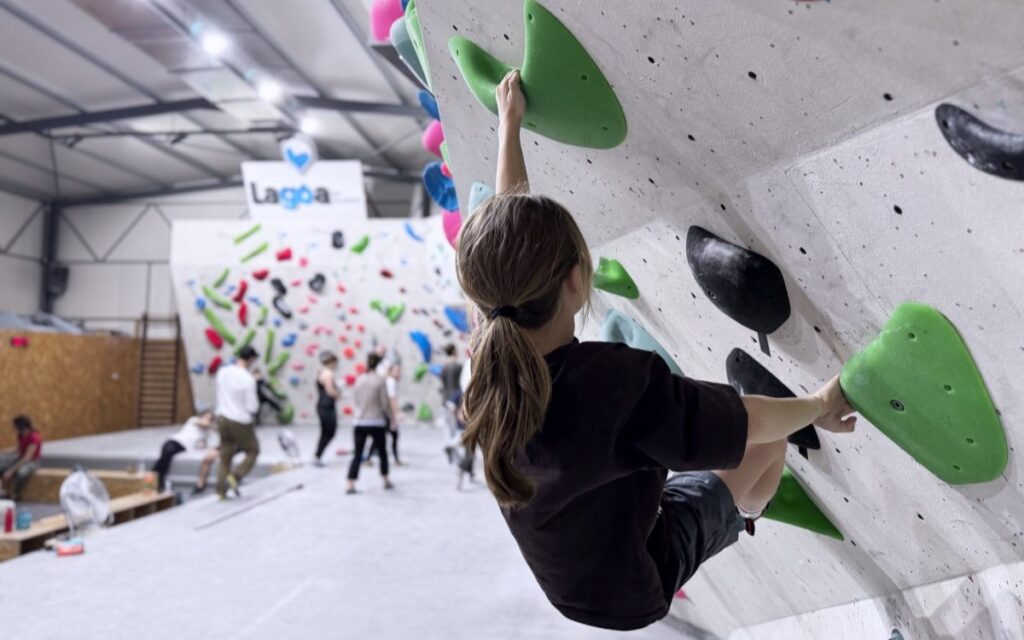
In both training and competition, Vertical prioritises sporting quality and steady progress. In March, the centre hosted the Portuguese Bouldering Cup for the third time and has organised an annual competition since 2018.
In 2025, two Vertical athletes achieved notable results: Madalena Sacramento placed third in the Regional Under-11 category, and Rita Marques won the Regional Under-13 title. At the Portuguese Cup, Nuno secured second place in Master A; in Master B, Catarina Silva and Eduardo Silva claimed victory, with Valter Guerreiro finishing second.
Whilst the current facilities already offer solid training conditions, the ambition is to expand the space and create a larger warm-up area, with continuous improvement in mind.
Follow Inside Algarve Magazine on Instagram and Facebook for more news!
Read also: